
The Asian Le Mans Series (ALMS) used its Dubai and Abu Dhabi rounds to prove that it is far more than just the “little offshoot” of the WEC. This review looks back at the 25/26 season.
What Was Decided in the Desert
When the Asian Le Mans Series left Sepang and headed for Dubai and Abu Dhabi, the championship looked almost decided. However, what followed was exactly what endurance racing fans love. The story went from a dominant title charge to a tense finale, with many small twists and turns along the way.
A record grid, a high number of professional and factory drivers, and the prospect of Le Mans wildcards all raised the sporting level of the series. Any team aiming for the top in the Emirates needed strong nerves, smart planning and a little luck.
Dubai: CrowdStrike Racing’s Double in the Desert
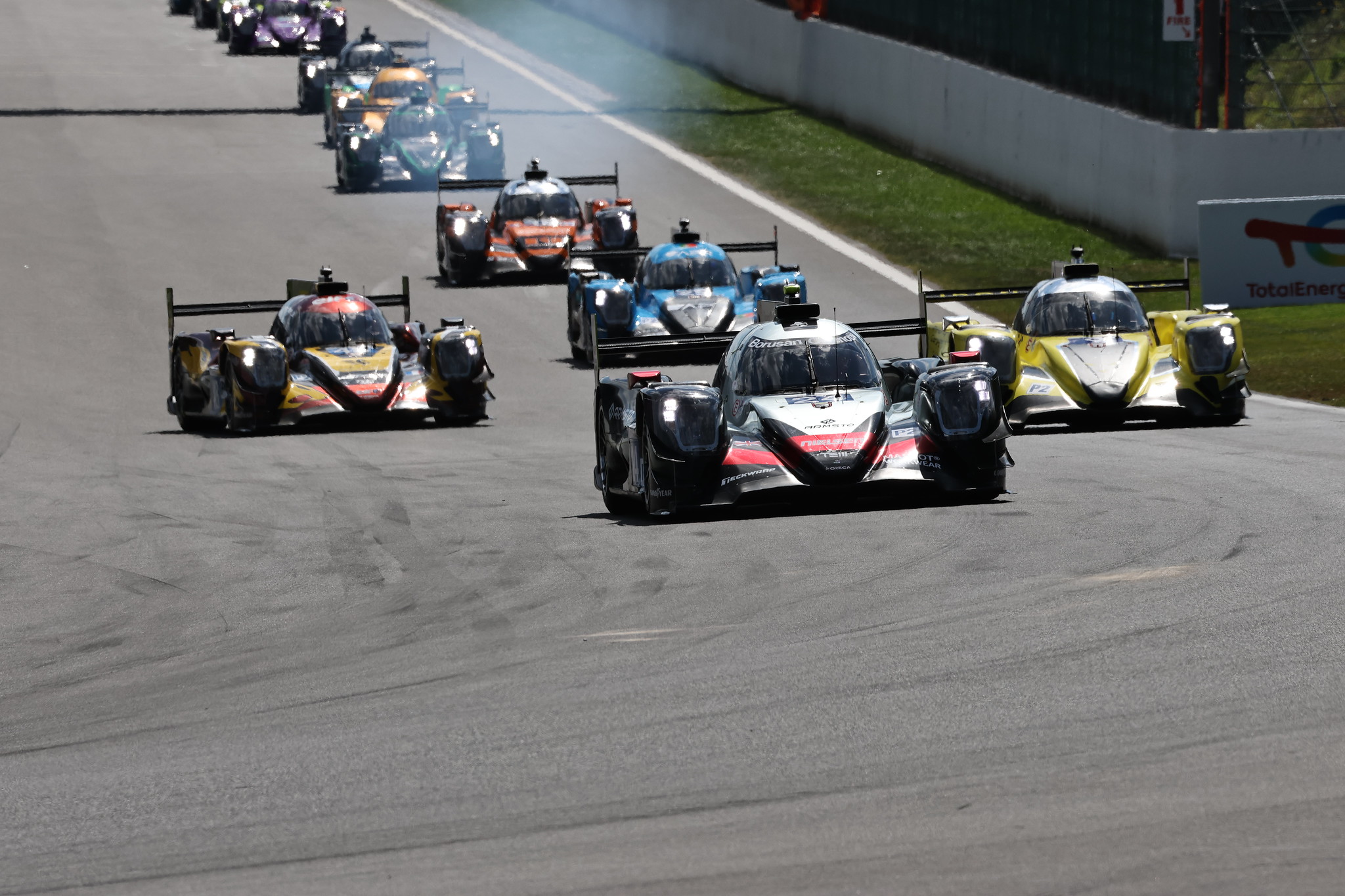
In Dubai, 48 cars and 142 drivers from 35 nations packed into the Autodrome. This record field created changing traffic patterns on almost every lap of the four‑hour race. On this track it became clear how tough the mix of prototypes and GT3 cars can be when gaps on the road are small. Mistakes then happen quickly.
CrowdStrike Racing by APR made a clear statement. The Oreca of George Kurtz, Malthe Jakobsen and Louis Delétraz took a double victory in the desert and sent a strong message in the title fight. Pace, strategy and very clean work in lapping traffic laid the foundation for their LMP2 triumph. The team won both races and drew level with Cetilar Racing in the points standings.
Behind them, battles raged in all classes. This is what has defined the series for years. Anyone who expected teams to “just log miles” instead saw constant fighting over track position, FCY windows and tyre condition.
GT and LMP3: Between Risk and Consistency
In GT, Dubai was the place where the title race really took shape in the minds of the main players. Kessel Racing with Dustin Scott Blattner, Chris Lulham and Dennis Marschall had to decide which strategy to follow. They could either take maximum risk to win single races or focus on the long‑term points picture.
More than once, pit stop timing and a late splash‑and‑dash in the final minutes decided between victory and just a podium finish. In the background, people were already calculating whether each result would be enough for the big prize in Abu Dhabi.
At the same time, LMP3 showed the value of consistency. Future champions CLX Motorsport proved that regular, solid performances can beat spectacular one‑off results. This was especially true in a field full of new LMP3 Gen3 cars. While other programmes struggled with set‑up windows and early reliability issues, CLX put in clean and steady stints all weekend long.
It was not always spectacular, but in the context of the season it was extremely valuable. In the “junior” prototype class, the title picture was shaped more by clean execution and detail work than by big moments of drama.
Abu Dhabi: Titles, Pressure and Nerves
Abu Dhabi hosted the final act of the compact ALMS season. The track became a pressure cooker in which all championship scenarios were calculated in real time. Yas Marina, with its mix of fast sections, tight infield and night‑time running, posed very different demands on tyres, brakes and concentration compared with Dubai. There was also the mental side. Every mistake in the dark threatened to undo an entire winter of work.
In the first four‑hour race in Abu Dhabi, CrowdStrike Racing by APR continued its strong form from Dubai. The team ran at the front, made no tactical errors and knew that every point would bring the Le Mans ticket closer. When DKR Engineering won the final race and the no. 4 car finished “only” eighth, the title was still secure.
The series not only crowned its LMP2 champions but also produced several notable stories. The new ALMS title for Algarve Pro Racing (APR) was the second for Kurtz and the third for Jakobsen.
At the same time, CLX Motorsport clinched the LMP3 crown with enough of a margin, despite a DNF after contact in the finale. Kessel Racing, in a nervous GT race shaped by diverging strategies, just managed to carry a small points advantage over BMW Team WRT across the line.
ALMS 25/26: A Test of Maturity
Across the season, the Asian Le Mans Series told a very modern endurance racing story. On the positive side were the record grid, the depth of driver line‑ups that only recently would have been expected in WEC or ELMS, and a title battle that stayed open until the final minutes.
Many teams used the winter as a full‑scale rehearsal for larger programmes. They tested driver line‑ups and processes in real competition instead of only running private tests. However, there were downsides as well. In Dubai especially, heavy traffic, a mix of pros, rookies and ambitious gentlemen drivers, plus a tight rulebook, created many phases shaped by yellow flags, contact and penalties. In Abu Dhabi the focus shifted towards strategy and mental strength. But the error rate still rose whenever the title pressure increased.
If you sum up the 2025/26 season in one phrase, it sits somewhere between a “sporting coming‑of‑age exam” and a “stress test” for everyone involved.
Le Mans in Sight: What the Wildcards Mean
The key to the whole story lies at the top of the food chain: the Le Mans wildcards. The LMP2 champions from CrowdStrike Racing by APR and the GT title winners from Kessel Racing have now earned a place on the entry list for the 24 Hours of Le Mans. This is one of the main reasons why the ALMS 25/26 grid was so full.
For both champions, the wildcard is more than a bonus start. It is a quality seal for each organisation. For the Ferrari GT programme, the step to La Sarthe also means a bigger stage. Customer teams, manufacturers and potential partners will watch them closely. In LMP2, the APR trio will face the combined experience of regular ELMS contenders.
Anyone who saw how confidently they executed their programme in Dubai and Abu Dhabi will find it hard to label them as midfield runners at Le Mans. It feels more like both teams have already rehearsed in the Asian Le Mans Series.
Outlook: From the Desert to La Sarthe
This Asian Le Mans season now comes full circle. Sepang laid the foundations, Dubai filtered the field and Abu Dhabi decided the titles. Le Mans will now show how much of this desert momentum carries all the way to France.
For anyone who missed the series during the winter, the standings only tell part of the story. The ALMS races this season were unusually hectic, unpredictable and impressive. At the same time, many signs suggest that the role of the Asian Le Mans Series in the global endurance racing landscape will continue to grow.
The 2026/27 season will, feature privateer Hypercars and add another class to one of the “junior WEC” platforms. Larger grids, stronger driver line‑ups and the direct link to Le Mans are turning the series into a must‑do for ambitious programmes. Any team that wants to fight at Le Mans will find it hard to ignore the ALMS.
Image © Endurance Archive